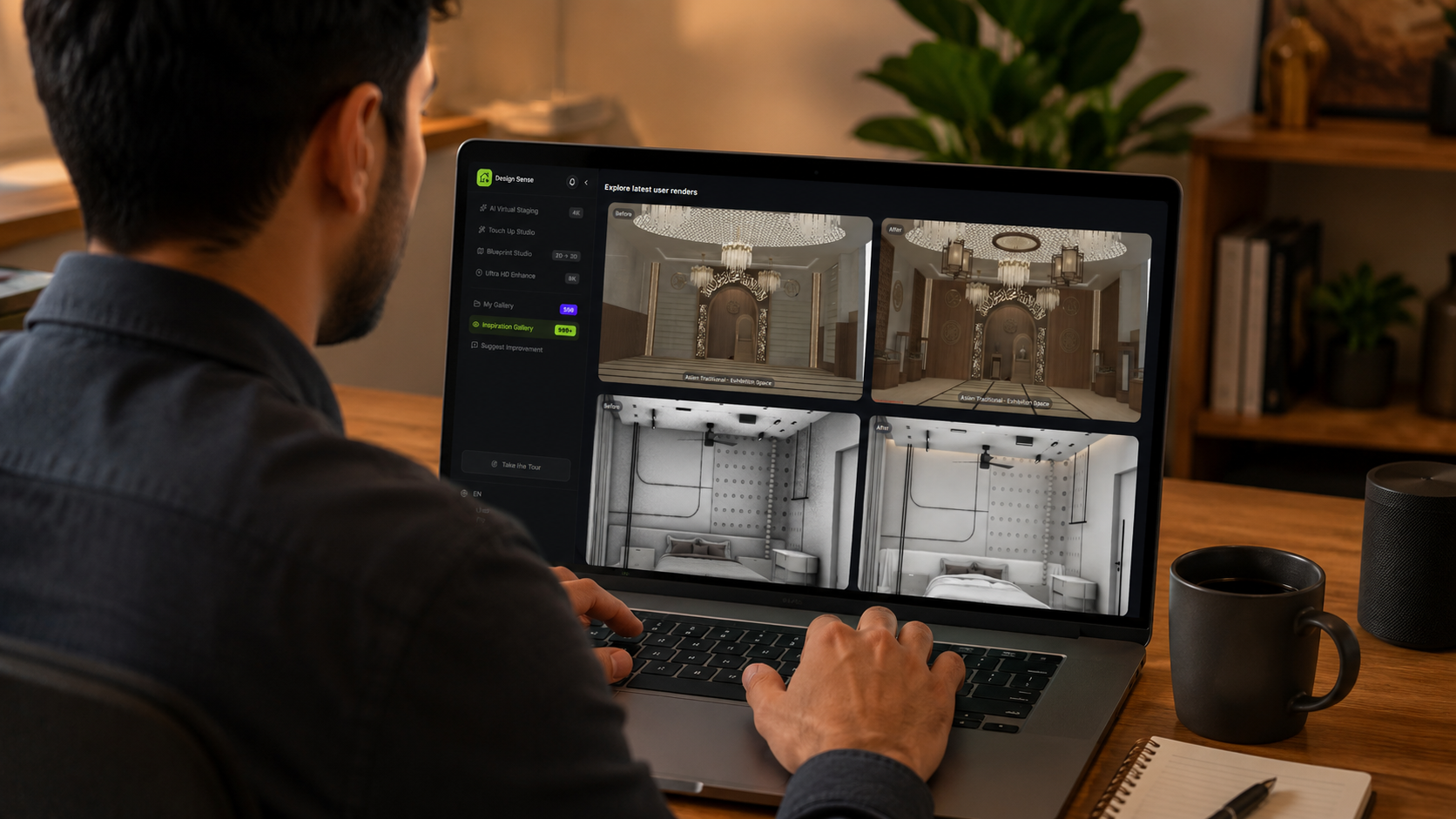
What this article says in 30 seconds
- The appropriate AI virtual staging tool depends on the team's source images workflow and publishing requirements
- Public feature lists should be verified against current vendor pages before purchase
- DesignSense AI Collov AI and Interior AI represent different publicly described staging and visual-editing workflows rather than a universal ranking
Use DesignSense for this workflow when you need to:
- Agents creating a shortlist of AI virtual staging tools
- Listing teams comparing publicly described workflows
- Brokerages developing internal image-review standards
AI virtual staging tools can help real estate teams compare room presentation options, but the appropriate product depends on the source images, review process, publishing requirements, licensing, and plan fit. This guide compares publicly described workflows from Collov AI, DesignSense AI, and Interior AI so agents and property marketers can build a more careful shortlist.
This is a non-ranked, non-exhaustive selection guide. It discusses three products with publicly described virtual staging or property-visualization workflows. Inclusion does not mean that a product has been independently tested, endorsed, or ranked above tools not included.
Disclosure: This guide is published by DesignSense AI, one of the products discussed. It is based on publicly available vendor information and DesignSense AI product documentation. We did not conduct a controlled head-to-head benchmark. The products discussed are not presented as an exhaustive or independently ranked list. Features, pricing, licensing, plan availability, and terms may change.
For a deeper evaluation checklist, read how to evaluate AI virtual staging tools.
Products discussed
The products are listed alphabetically and are not ranked.
- Collov AI: May suit teams seeking virtual staging alongside a wider collection of publicly listed property-photo editing tools.
- DesignSense AI: May suit users focused on virtual staging, room redesign, renovation visualization, and image enhancement from real photos.
- Interior AI: May suit users seeking virtual staging within a broader prompt- and style-driven AI interior-design environment.
Test each shortlisted product using representative listing photos and verify current plan details directly with the vendor.
How this guide was prepared
This guide uses official public product information available in July 2026 and DesignSense AI product documentation. It is not exhaustive, the products are not ranked, and no controlled head-to-head image test was conducted.
The workflow criteria below are presented as questions readers should evaluate. The guide does not assign realism, speed, usability, reliability, or image-quality scores. Readers should run their own comparison using identical source photos, similar settings, and the same intended publishing conditions across shortlisted tools.
Features, pricing, licensing, plan availability, and terms should be verified immediately before purchase.
Collov AI
According to Collov AI public feature pages, the platform lists real estate photo editing and virtual staging feature categories such as adding furniture, furniture eraser, room declutter, photo enhancement, material overlay, season changer, weather changer, natural twilight, day to dusk, pool water enhancement, lawn replacement, and related property-visual workflows.
Feature descriptions reflect publicly available vendor information. Availability may vary by plan.
Collov AI may be relevant when
- Your team wants virtual staging alongside several property-photo editing categories.
- Interior and exterior photo workflows both matter to your listing process.
- Furniture addition or removal is part of the media workflow.
- Twilight, weather, lawn, pool, material, or seasonal edits are currently supported and appropriate for the project.
Questions to verify
- Which features are included in the intended plan?
- Which edits are appropriate under the team's publishing policies?
- How are original images preserved?
- What export and licensing terms apply?
- How do outputs perform using representative listing photos?
DesignSense AI
DesignSense AI is designed around a workflow that can begin with a real room photo and continue through staging, room redesign, renovation visualization, or image enhancement. DesignSense AI's public pricing page lists product capabilities such as quick staging, AI editing, styles, HD renders, 4K renders, cinematic walkthrough videos, priority render queue, AI upscale, unlimited SD drafts on the base subscription, and TouchUp Studio for targeted edits.
Feature descriptions reflect publicly available DesignSense AI product information. Availability may vary by plan. A recommended human-review process:
- Upload a representative room photo.
- Select the intended staging or visualization workflow.
- Generate one or more concepts.
- Compare each result with the original image.
- Reject outputs that alter material property facts.
- Apply enhancement only to an approved result.
- Review disclosure and publishing requirements separately.
This workflow may suit listing teams that want staging, redesign, and image-finishing functions connected to real source photos. For source-photo preparation, use how to prepare listing photos for AI virtual staging.
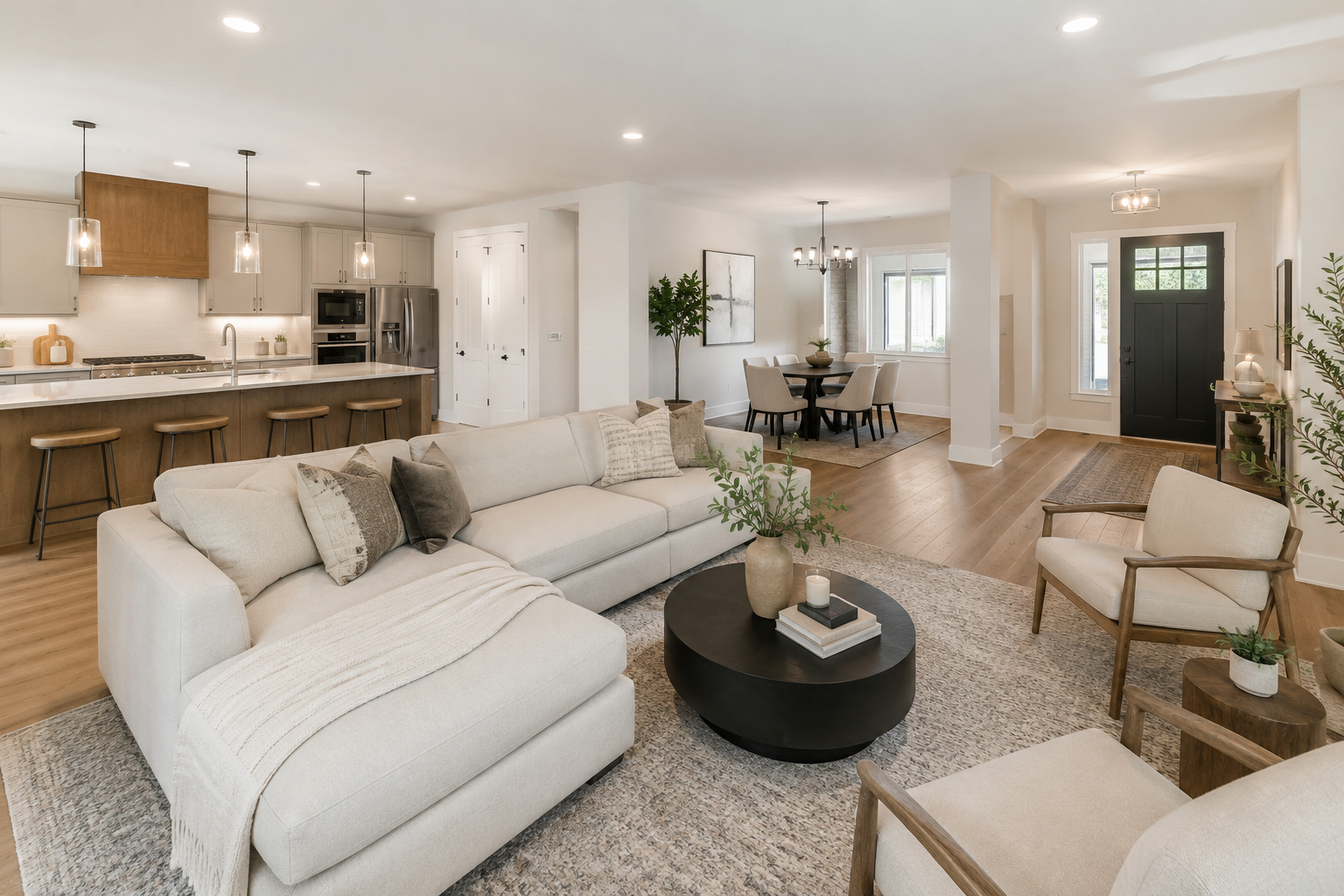
Illustrative DesignSense AI workflow image; not a head-to-head comparison result.
Interior AI
According to Interior AI official website, the product presents AI interior design and virtual staging workflows that include uploading room photos, selecting room type and style, optional prompt input, custom style references, preset styles, virtual staging, Sketch2Image, SketchUp screenshot rendering, outdoor or garden design, upscaling or image finishing on listed plans, walkthrough videos, and immersive or 3D-style exploration.
Feature descriptions reflect publicly available vendor information. Availability may vary by plan.
Interior AI may be relevant when
- Broad style exploration is part of the project.
- Prompt-based generation is useful to the team.
- Room redesign beyond listing staging is needed.
- Sketch or rendering workflows are currently supported and relevant.
- Walkthrough or immersive outputs are currently supported and relevant.
Questions to verify
- Which features are included in the intended plan?
- How closely do outputs preserve the source room?
- What export and commercial-use terms apply?
- How does the workflow perform with representative listing photos?
- What review steps are needed before property-marketing use?
Alternative to AI software: human-led virtual staging services
Human-led virtual staging services are a service model, not software tools in this comparison. They may suit teams that want a managed handoff, direct revision communication, or human art direction for a specific listing.
Turn one room photo into a clearer next step.
Upload one room photo, test a few directions quickly, and keep the option that is easiest to present or ship.
They may be relevant when:
- A team wants a service provider to manage production.
- The listing has unusual visual constraints.
- The agent wants external staging direction.
- The review process depends on client or seller feedback.
They may be less appropriate when:
- The team wants to test concepts internally.
- The workflow requires frequent image iteration.
- Related AI workflows such as room redesign or image enhancement are also needed.
For cost framing, read virtual staging cost in 2026.
What to test before you buy
This guide has not performed a controlled test on your behalf. Use the same source images, settings, and output conditions across shortlisted products. Test at least:
- A vacant living room
- A bedroom that needs scale context
- A compact or awkward room
Then ask:
- Does furniture scale appear plausible?
- Are windows, doors, fixtures, flooring, and permanent features preserved?
- Does the lighting integrate naturally with the source image?
- Are there visible AI artifacts?
- Can weak results be rejected efficiently?
- Is the export suitable for the intended publishing channel?
- Are original images preserved?
- What licensing and commercial-use terms apply?
- What labeling or disclosure process does the team need?
Do not convert those questions into product scores unless your team has a documented testing process.
Compliance and publishing review
Regardless of the platform used, agents and brokerages should review altered property images before publication. Requirements vary by MLS, brokerage, platform, and jurisdiction. Software does not replace professional or legal review. Before publishing an altered listing photo, confirm:
- Whether the image needs a label or caption
- Whether the original image must be retained or displayed
- Whether the edit changes permanent property features
- Whether the image accurately represents buyer-visible conditions
- Whether brokerage or platform approval is required
This section provides general workflow information and is not legal advice. For more detail, read MLS rules and disclosure for virtual staging.
Common mistakes
Avoid these platform-neutral mistakes:
- Trusting demo galleries without testing representative images
- Choosing by feature count alone
- Ignoring original-photo preservation
- Failing to review altered permanent features
- Assuming software determines disclosure requirements
- Comparing prices without considering revision and review time
- Publishing generated images without human approval
The appropriate workflow should support the way your team reviews, approves, and publishes listing photos.
FAQ
What is the best AI virtual staging tool in 2026?
There is no universal best tool for every listing workflow. The appropriate choice depends on source-photo quality, staging volume, required editing categories, review processes, export needs, licensing, pricing, and publishing requirements. Test shortlisted tools using the same representative photos before deciding.
Should agents choose an AI tool or a human staging service?
It depends on the workflow. AI software may be relevant when teams want to generate and review concepts internally. Human-led services may be relevant when the team wants a managed production process, outside art direction, or service-provider revision support.
Is the cheapest virtual staging tool the best choice?
Not necessarily. Total workflow cost may include subscription or image costs, regeneration, human review, revision time, image finishing, disclosure administration, and the time required to get an image approved for its intended channel.
Do AI virtual staging tools handle MLS disclosure?
Do not assume that software determines or completes the required disclosure process. Agents and brokerages should confirm applicable MLS, platform, brokerage, and legal requirements and establish their own process for labeling, captions, original-photo retention, and approval.
This is general workflow information and not legal advice.
Sources and update policy
Product information in this article was reviewed using publicly available vendor pages. Features, pricing, licensing, plan availability, and terms may change after publication. Readers should verify current information directly with each vendor before making a purchase decision.
DesignSense AI may periodically review and update this article when material public product information changes.
Final recommendation
Create a shortlist based on the editing functions your team actually needs, then test each product with the same representative listing photos. Compare source-room preservation, visible artifacts, review effort, export quality, licensing, plan fit, and publishing requirements. DesignSense AI, Collov AI, and Interior AI describe different workflows publicly, but this guide does not establish a universal winner.
To evaluate the DesignSense AI workflow specifically, test it with a representative room photo and review the output against the original image and your publishing standards.
Turn one room photo into a clearer next step.
Use DesignSense to move from room photo to a clearer concept without waiting on a slower manual workflow.