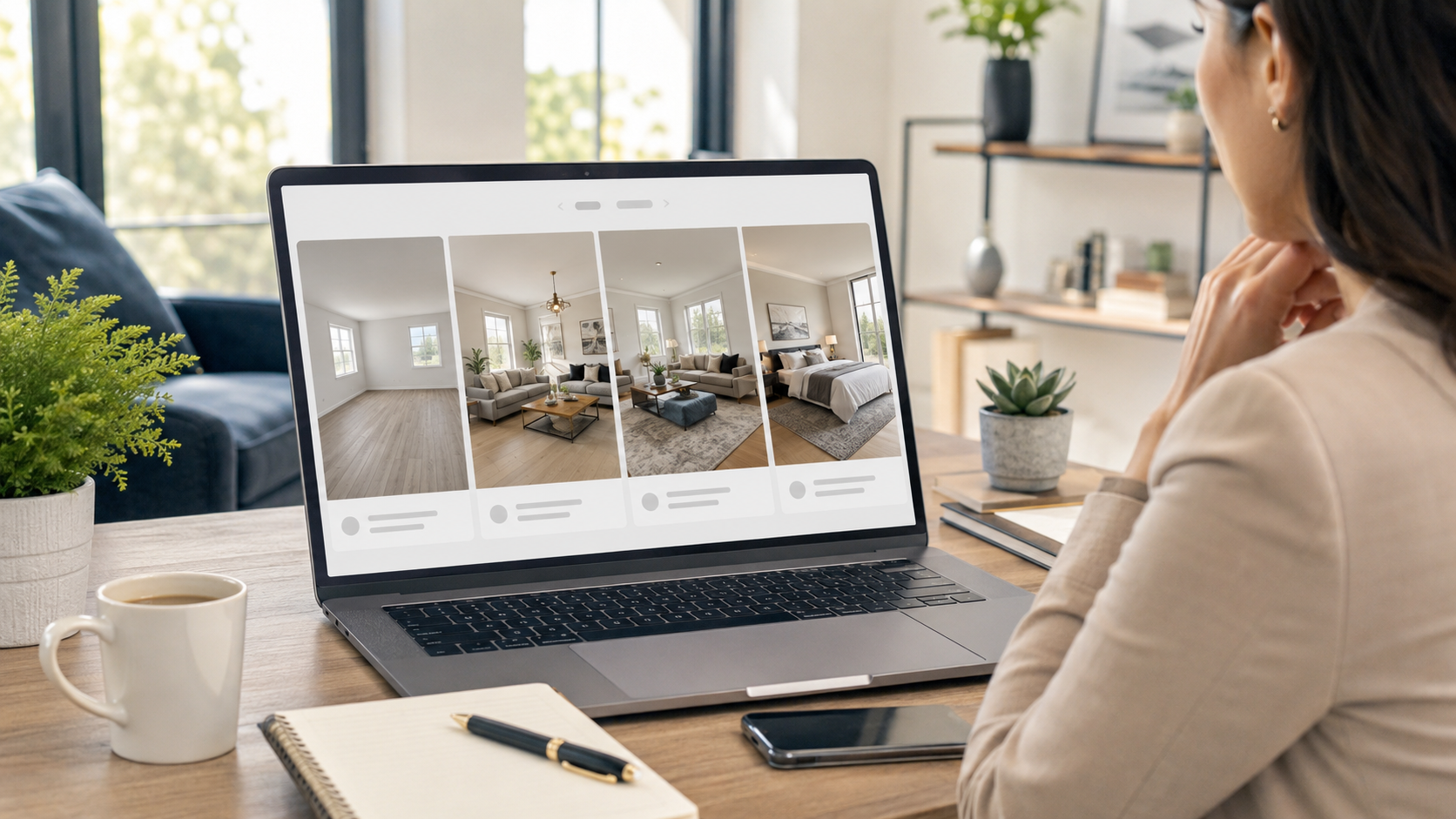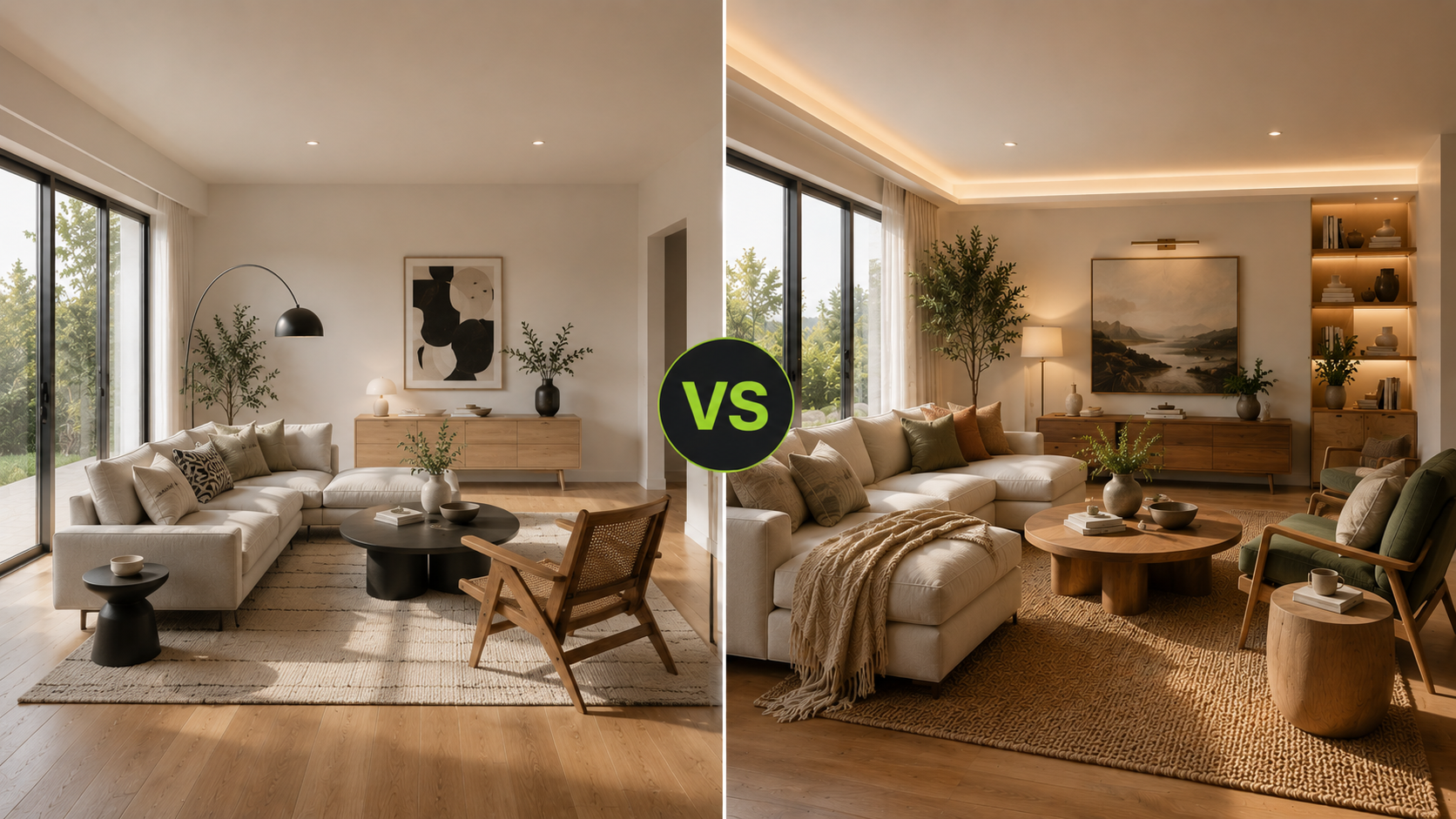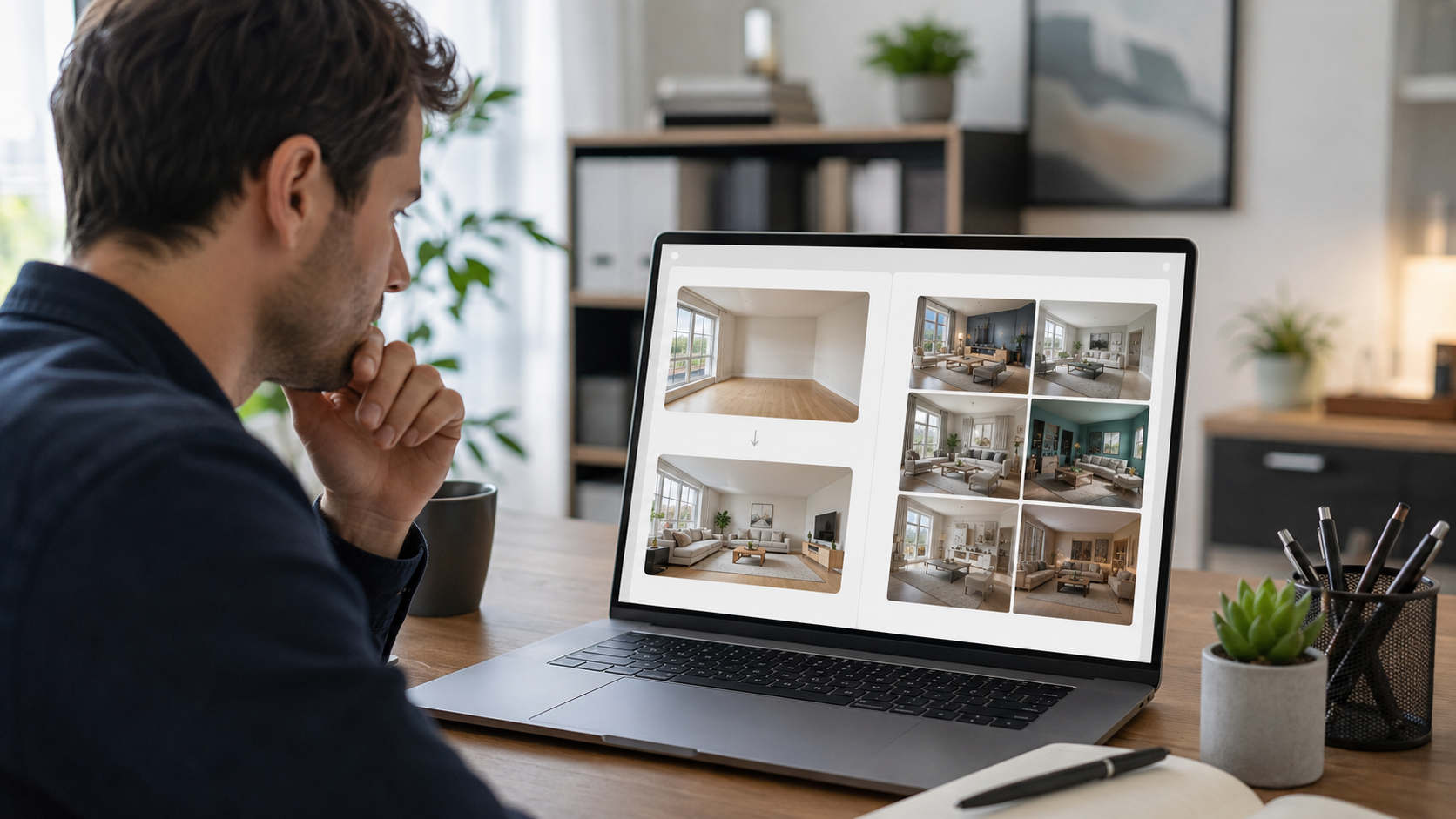
What this article says in 30 seconds
- DesignSense AI may suit users focused on property-photo staging room redesign renovation visualization and image enhancement
- Interior AI publicly presents a broad AI interior design generator with styles prompting virtual staging and additional creative controls
- Real estate teams should test both platforms with actual listing photos and verify current plans before deciding
Use DesignSense for this workflow when you need to:
- Agents comparing virtual staging workflows
- Designers choosing an AI concepting tool
- Property teams deciding between listing visuals and broad redesign generation
DesignSense AI and Interior AI both help users create AI room visuals, but they are not identical products. The appropriate choice depends on whether your priority is property-photo staging, room redesign, renovation visualization, image enhancement, or broader AI interior design exploration.
For real estate agents, the decision should be based on representative listing photos and a clear review process. A generated image may look useful in isolation, but it still needs human approval before it reaches a client, MLS, listing portal, or property-marketing channel.
Disclosure: This comparison is published by DesignSense AI, one of the products discussed. It is based on publicly available vendor information and DesignSense AI product documentation. We did not conduct a controlled head-to-head benchmark of the competing product. Features, pricing, licensing, plan availability, and terms may change, so readers should verify current information directly with each vendor.
For category context, read AI room redesign vs virtual staging.
The short answer
DesignSense AI may be relevant when users need:
- Virtual staging from real listing photos
- Room redesign and renovation visualization workflows
- Concept review before publishing or presenting
- Image enhancement and upscale around an approved output
- A workflow for agents, homeowners, designers, and property teams
Interior AI may be relevant when users need:
- Broad AI interior design generation
- Preset design styles
- Prompt-led room transformation
- Custom style references
- Virtual staging as part of a larger AI interior design environment
- Sketch, SketchUp, outdoor, walkthrough, or immersive outputs where currently supported
Both tools should be tested with your own images before a purchase decision.
How this comparison was prepared
This comparison uses public vendor information available in July 2026 and DesignSense AI product documentation. DesignSense AI did not conduct a controlled benchmark of Interior AI, and this article does not prove superior image quality, realism, speed, reliability, or usability for either product.
The article compares publicly described workflows and possible use cases. Workflow-fit statements are editorial guidance, not measured performance conclusions. Readers should test both products with representative images from their own workflow and verify current features, plans, licensing, export terms, and pricing immediately before purchase.
DesignSense AI workflow
DesignSense AI is designed around workflows that begin with a real room or property photo and move toward a staging, redesign, renovation, or image-enhancement concept.
Public DesignSense AI product information lists capabilities such as quick staging, AI editing, styles, HD renders, 4K renders, cinematic walkthrough videos, priority render queue, AI upscale, unlimited SD drafts on the base subscription, and TouchUp Studio for targeted edits. Availability may vary by plan.
Relevant workflow categories include:
- Real estate virtual staging
- Homeowner room redesign
- Renovation visualization
- Airbnb and rental listing concepts
- Interior concept review
- Image enhancement after a direction is selected
A human-review process can look like this:
- Upload a real room or property photo.
- Generate a staging or redesign direction.
- Compare the result against the original.
- Reject outputs that alter material property facts.
- Keep the option that supports the project goal.
- Use upscale or finishing only after approval.
This workflow may suit users who want generated images to remain connected to a specific room, listing, renovation discussion, or client presentation.
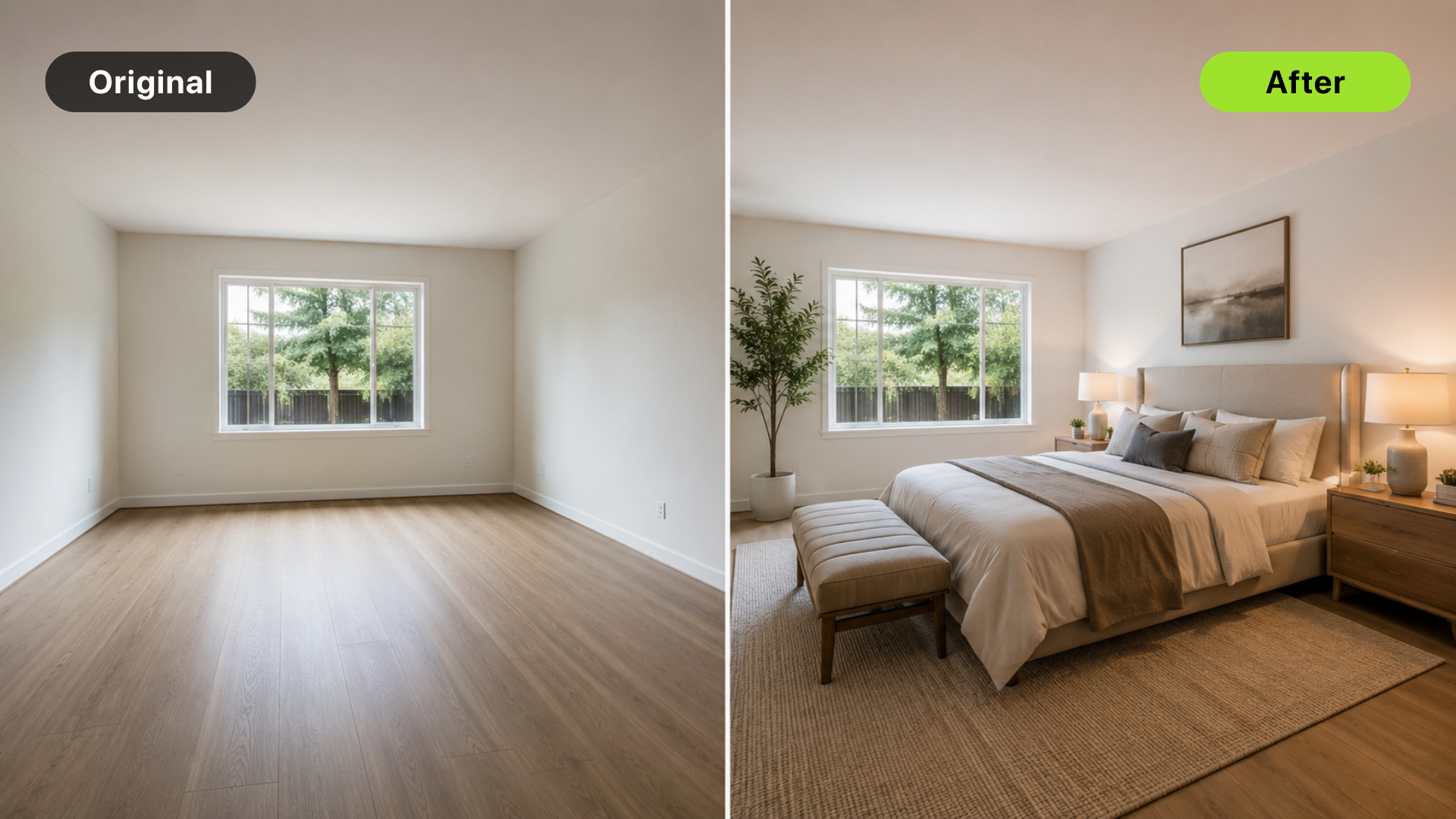
Illustrative DesignSense AI workflow image; not a head-to-head comparison result.
Interior AI workflow
According to Interior AI's official website, Interior AI presents its platform as an AI interior design and virtual staging app. Publicly described feature categories include uploading room photos, selecting room type and style, optional prompt input, custom style references, preset interior styles, virtual staging, Sketch2Image, SketchUp screenshot rendering, outdoor or garden design, upscaling or image finishing on listed plans, walkthrough videos, and immersive or 3D-style exploration.
Feature descriptions reflect publicly available vendor information. Availability may vary by plan. Interior AI may be relevant when:
- Broad interior style exploration is part of the project.
- Prompt-based generation is useful.
- Room redesign extends beyond real estate listing staging.
- Sketch or SketchUp rendering workflows are currently supported and relevant.
- Walkthrough or immersive outputs are currently supported and relevant.
Readers should verify which features are included in the intended plan and whether the output rights fit their use case.
Real estate listing workflow
For listing use, the priority is buyer clarity and accurate property presentation. Regardless of the platform used, dramatic redesigns, finish changes, or structural-looking alterations require additional review before they are used in property marketing. Agents and brokerages should check:
- Whether the generated image preserves permanent property features
- Whether original photos are retained
- Whether the edited photo needs a label or caption
- Whether brokerage or MLS rules require additional review
- Whether the image accurately represents the property buyers will see
Turn one room photo into a clearer next step.
Upload one room photo, test a few directions quickly, and keep the option that is easiest to present or ship.
Requirements vary by MLS, brokerage, platform, and jurisdiction. Software does not replace professional or legal review. This section provides general workflow information and is not legal advice.
For the compliance side, review MLS rules and disclosure for virtual staging.
Room redesign workflow
For homeowner and designer concepting, the question changes. You may not be publishing a listing image. You may be deciding which direction to explore.
DesignSense AI may suit users who want:
- A redesign concept from a current room photo
- A few options to compare
- A concept that can guide a discussion
- Image enhancement after a direction is selected
Interior AI may suit users who want:
- Broad style exploration
- Prompt-driven experimentation
- Custom style references
- Sketch or rendering paths where currently supported
- A broader AI interior design environment
If the project becomes technical, neither tool replaces construction documents, code review, measurements, permits, or professional design review.
Image finishing and output review
For real estate and client presentation, the final output has to be reviewed in the context where it will be used. Listing thumbnails, client decks, mobile screens, print pieces, and MLS galleries can expose different quality issues. Before using an output, ask:
- Are visible AI artifacts present?
- Does the image preserve the source-room structure?
- Are the intended export rights clear?
- Is the image suitable for the publishing channel?
- Is additional disclosure or labeling needed?
- Does the plan include the features needed for finishing?
For broader budget planning, see virtual staging cost in 2026.
Common mistakes
Avoid these comparison mistakes:
- Choosing by style count alone
- Using a dramatic redesign as a listing photo without review
- Ignoring disclosure requirements
- Comparing polished demos instead of your own room photos
- Assuming a broad design tool is automatically the appropriate listing tool
- Treating software as a substitute for professional review
Your workflow, source images, plan requirements, and publishing context should drive the decision.
FAQ
Is DesignSense AI the same as Interior AI?
No. Both create AI room visuals, but DesignSense AI is positioned around staging, room redesign, image editing, and image enhancement workflows from real photos. Interior AI is positioned as a broad AI interior design and virtual staging generator.
Which is better for real estate agents?
DesignSense AI may suit agents prioritizing virtual staging, room redesign, renovation visualization, and image enhancement from real property photos. Interior AI may suit users who want broad style exploration, prompting, and additional creative interior-design controls. Agents should test both platforms with actual listing photos and review every output before publication.
Which is better for homeowners?
It depends on the project. DesignSense AI may fit practical room redesign and renovation visualization workflows. Interior AI may fit users who want broad style experimentation and prompt-based interior design exploration.
Should I test both tools?
Yes. Use the same room photos in both tools and compare source-room preservation, artifacts, export quality, review effort, licensing, plan fit, and publishing requirements.
Sources and update policy
Product information in this article was reviewed using publicly available vendor pages. Features, pricing, licensing, plan availability, and terms may change after publication. Readers should verify current information directly with each vendor before making a purchase decision.
DesignSense AI may periodically review and update this article when material public product information changes.
Final recommendation
Based on the publicly described workflows, DesignSense AI may suit users focused on property-photo staging, room redesign, renovation visualization, and image enhancement. Interior AI may suit users seeking broad style exploration, prompt-based design generation, and additional creative controls. Test both tools using the same representative room photos before deciding.
To evaluate the DesignSense AI workflow specifically, compare with your own room and review the output against the original image and your publishing standards.
Turn one room photo into a clearer next step.
Use DesignSense to move from room photo to a clearer concept without waiting on a slower manual workflow.