What this article says in 30 seconds
- Eclectic style mixes a limited number of periods and influences around repeated colors materials or shapes
- Negative space and practical circulation keep layered rooms from becoming visual clutter
- Use AI to test the whole-home palette before applying it to living bedroom kitchen bathroom dining office entry and outdoor spaces
- Review every concept for scale architecture function and listing disclosure before using it
Use DesignSense for this workflow when you need to:
- Homeowners who want a collected personal interior
- Designers combining vintage pieces with contemporary furniture
- Airbnb hosts creating a memorable but usable property
- Agents visualizing character-rich listing concepts
Eclectic style is not an invitation to put everything you like into one room. It is a deliberate mix of periods, shapes, colors, patterns, and personal objects held together by a visible design rule. A strong eclectic living room might combine a midcentury sofa, an antique cabinet, a contemporary chair, and a vintage rug, but repeat the same wood tone or accent color so the mix still reads as one room.
DesignSense AI helps you test that balance from a real photo before you move furniture, buy vintage pieces, renovate, stage a rental, or prepare a listing concept. The useful question is not, "Can these styles mix?" It is, "What will make the mix feel intentional in this specific room?"
For the wider process, start with how to use AI for room redesign and renovation visualization.
Quick eclectic style formula
An eclectic interior needs variety and discipline at the same time. Use DesignSense AI to test:
- Two or three design influences rather than every style at once
- One grounding neutral plus two or three repeated accent colors
- Old and new furniture connected by scale, shape, finish, or upholstery
- Mixed patterns that share at least one color or level of contrast
- Smooth and rough materials such as velvet, linen, aged wood, metal, ceramic, and stone
- Personal art and objects with enough empty space around them to be noticed
The eclectic style overview from The Spruce makes an important distinction: eclectic rooms are varied and unpredictable, but the successful ones are purposeful rather than anything-goes. That is the standard to use when reviewing an AI concept.
Room-by-room image guide
Start with the real room photo and preserve its architecture, windows, doors, and circulation. Then apply one repeated color story and material logic across the home.
Eclectic living room: establish the anchor pieces
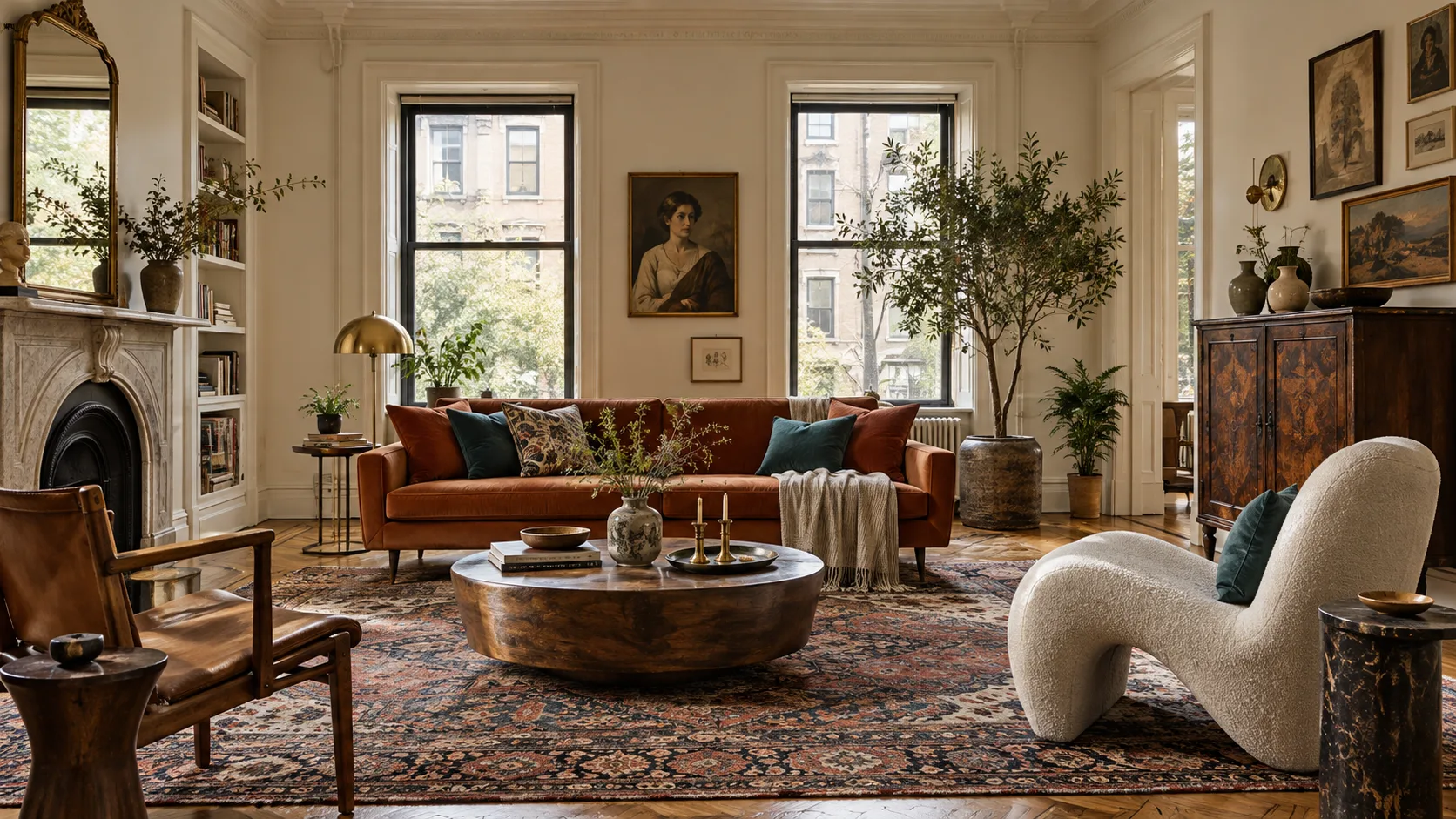
Image direction: collected contrast with a controlled palette. The rust sofa, teal accents, warm wood, aged brass, and cream upholstery repeat across pieces from different periods. The vintage rug connects them, while open floor area keeps the room from feeling overfilled.
Choose one or two visual anchors before adding smaller objects. In most living rooms, that means the sofa and rug, the fireplace and art, or a distinctive vintage case piece.
Eclectic bedroom: make the mix feel restful
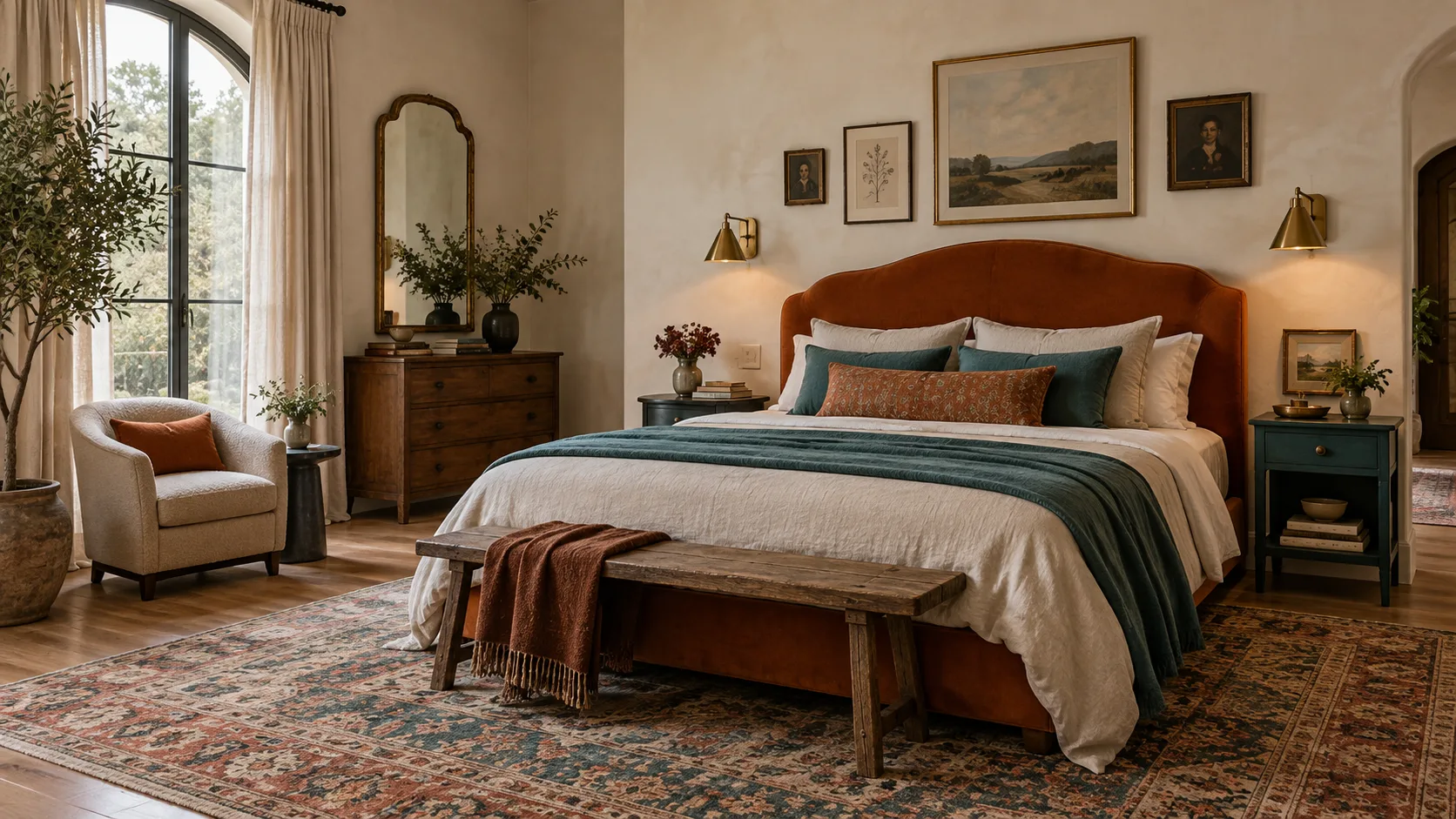
Image direction: asymmetry within a calm framework. The nightstands are not identical, but their height and visual weight are balanced. Repeated rust and teal tones make the antique dresser, modern chair, tailored bedding, and landscape art feel related.
Keep the bed visually quiet, then use lighting, nightstands, art, and one textile pattern to add personality. Too many competing focal points can make a bedroom feel active when it should feel restorative.
Eclectic kitchen: mix eras without weakening function
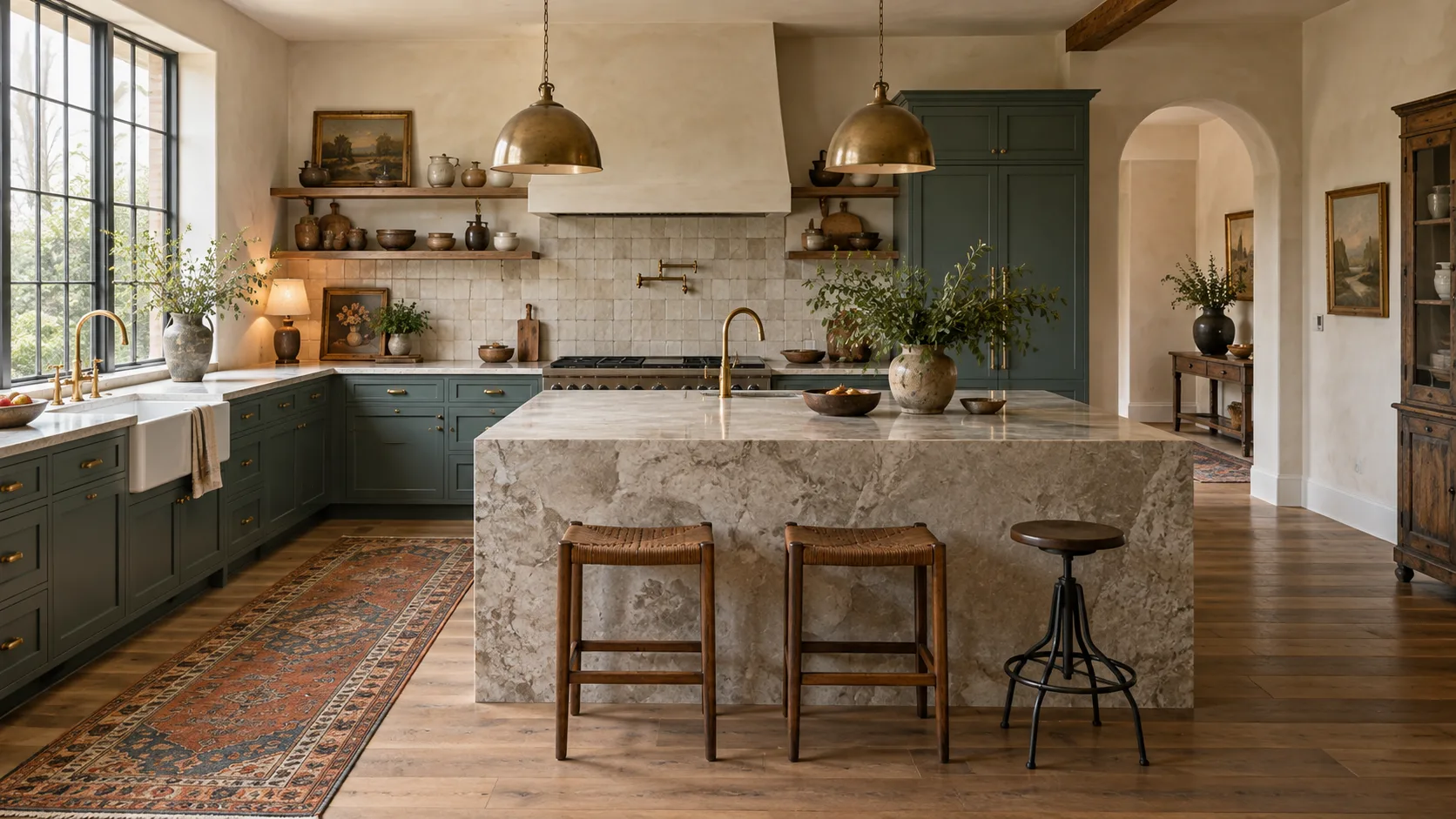
Image direction: classic shell with modern utility and collected details. The cabinetry and runner bring character, while the large stone work surface keeps the room current and functional. Handmade tile and ceramics add variation without interrupting the work zones.
Use AI to compare finishes, not to invent a new kitchen footprint. Cabinet dimensions, appliance clearance, ventilation, plumbing, electrical work, and countertop support still require professional planning.
Eclectic bathroom: choose one unexpected move
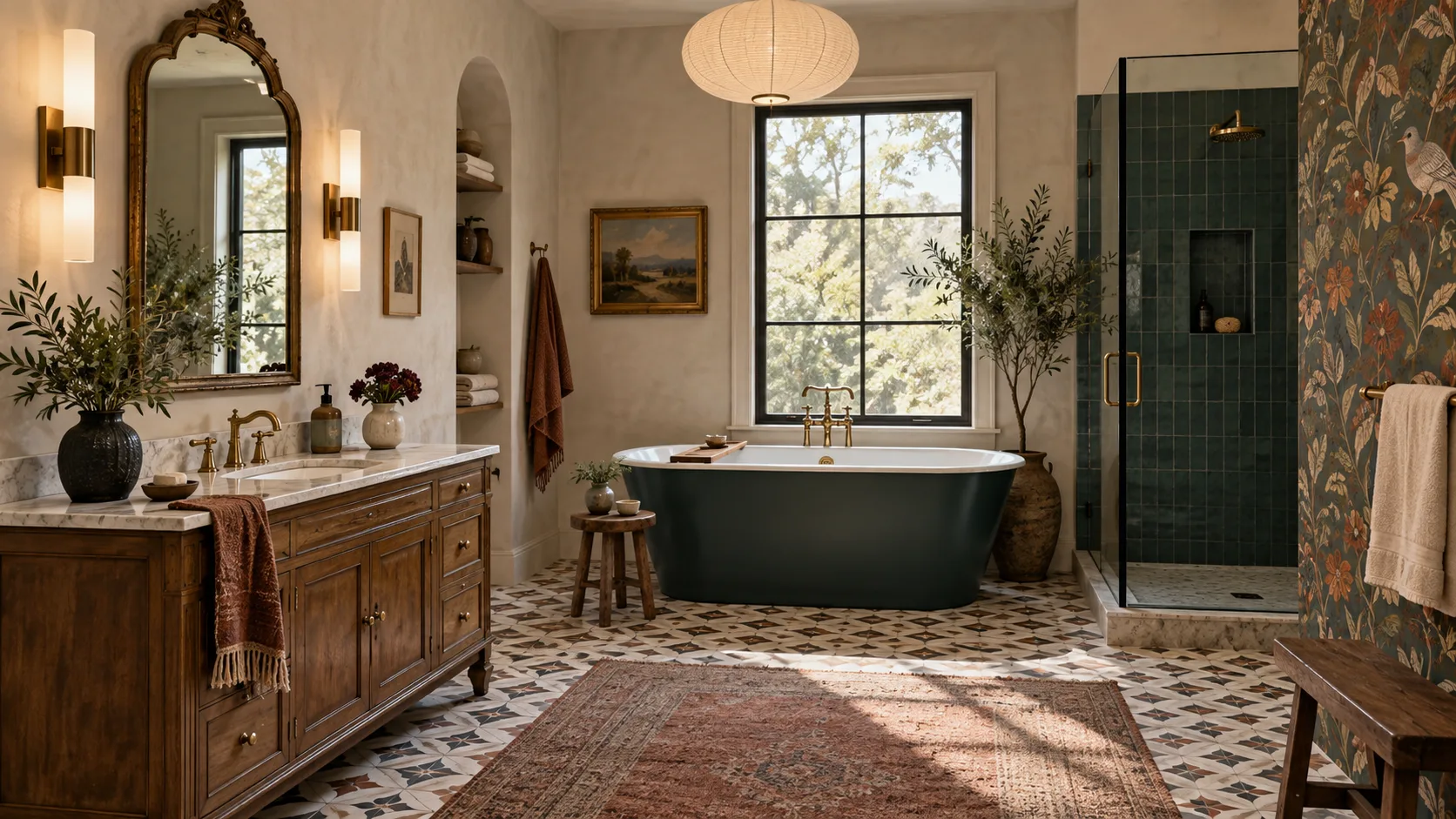
Image direction: expressive surfaces balanced by familiar fixtures. The patterned floor, floral wallpaper, antique-style vanity, and modern glass shower are different ideas, but dark green and warm brass repeat enough to hold the room together.
In a smaller bathroom, choose one surprise: wallpaper, patterned tile, an unusual mirror, or a painted vanity. Using all four can make the room look smaller and complicate future maintenance.
Eclectic dining room: let the table connect the eras
Turn one room photo into a clearer next step.
Upload one room photo, test a few directions quickly, and keep the option that is easiest to present or ship.
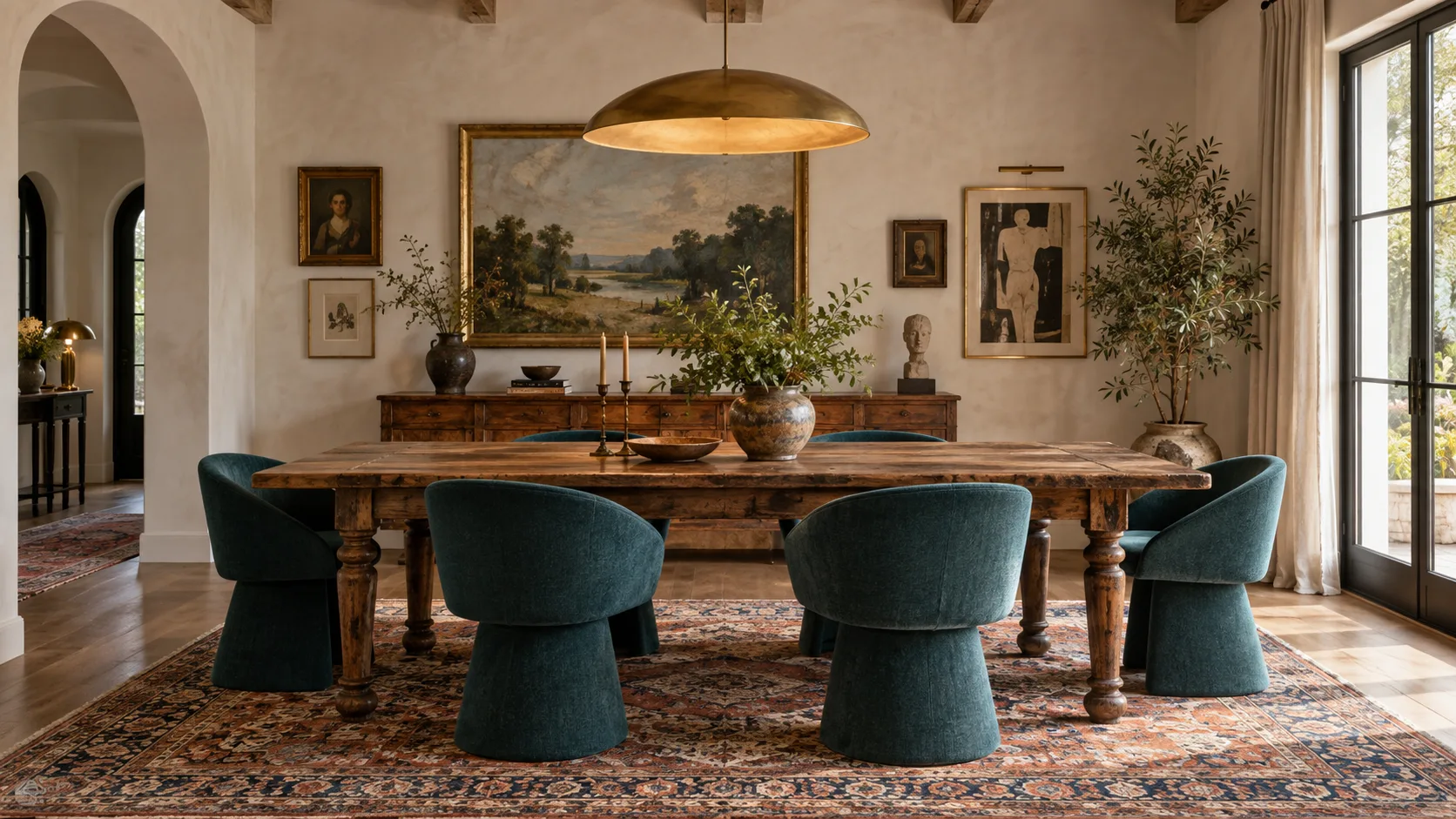
Image direction: old table, new seating, shared color story. The table supplies age and texture, the chairs bring a contemporary silhouette, and the teal upholstery repeats a color found in the rug. The oversized pendant gives the mixed furniture one clear center.
Check chair height, table clearance, and the number of seats before accepting the image. Eclectic design still needs a dining room that works when every chair is occupied.
Eclectic entryway: introduce personality without blocking the path
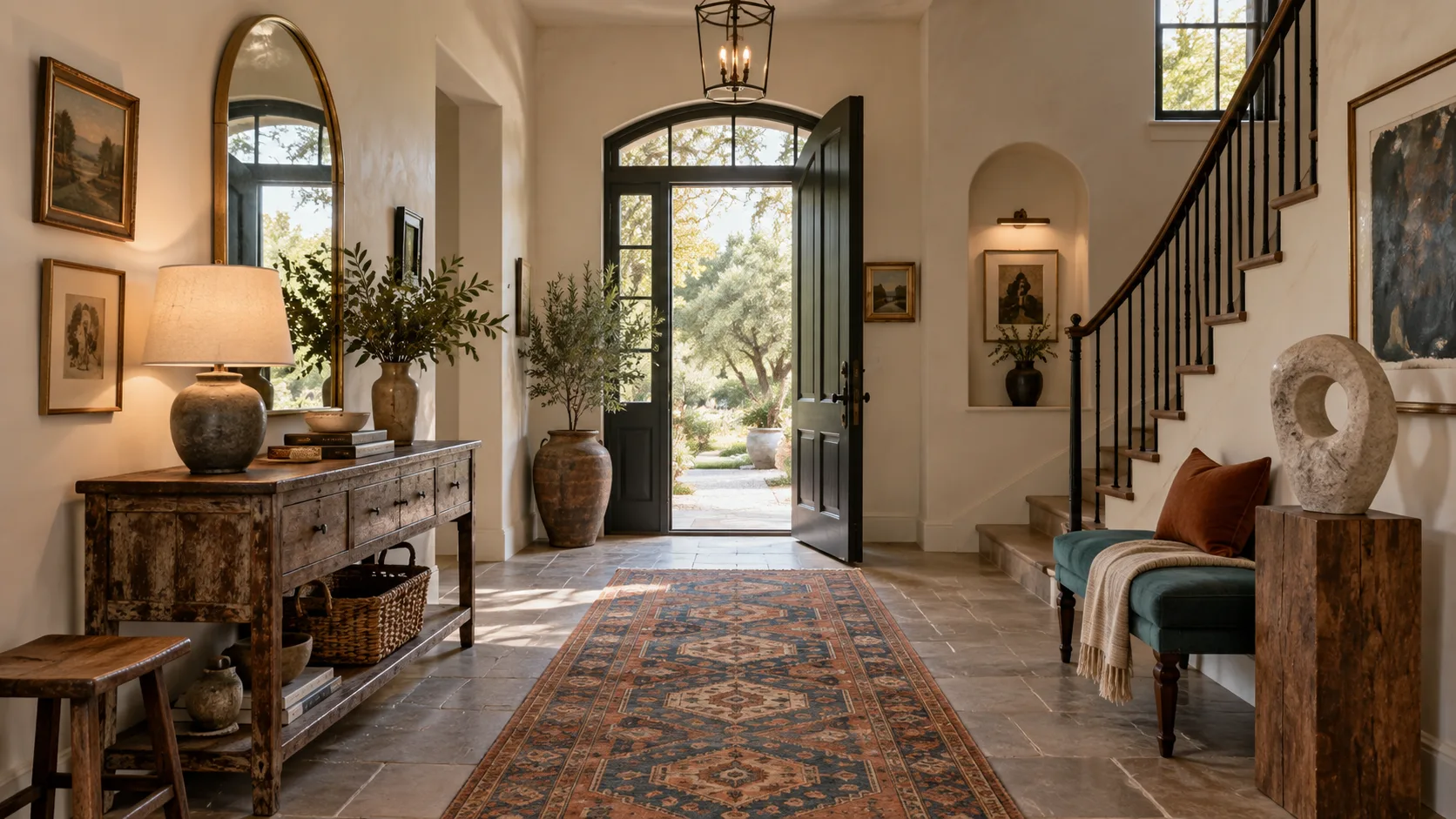
Image direction: character at the edges, clear movement through the center. The runner, art, mirror, vintage console, and sculptural object make a strong first impression, but the main route through the entry remains open.
Ask the AI to preserve the door swing, stair access, and real hallway width. A beautiful console is not useful if it narrows the only path into the home.
Eclectic home office: mix character with ergonomic basics
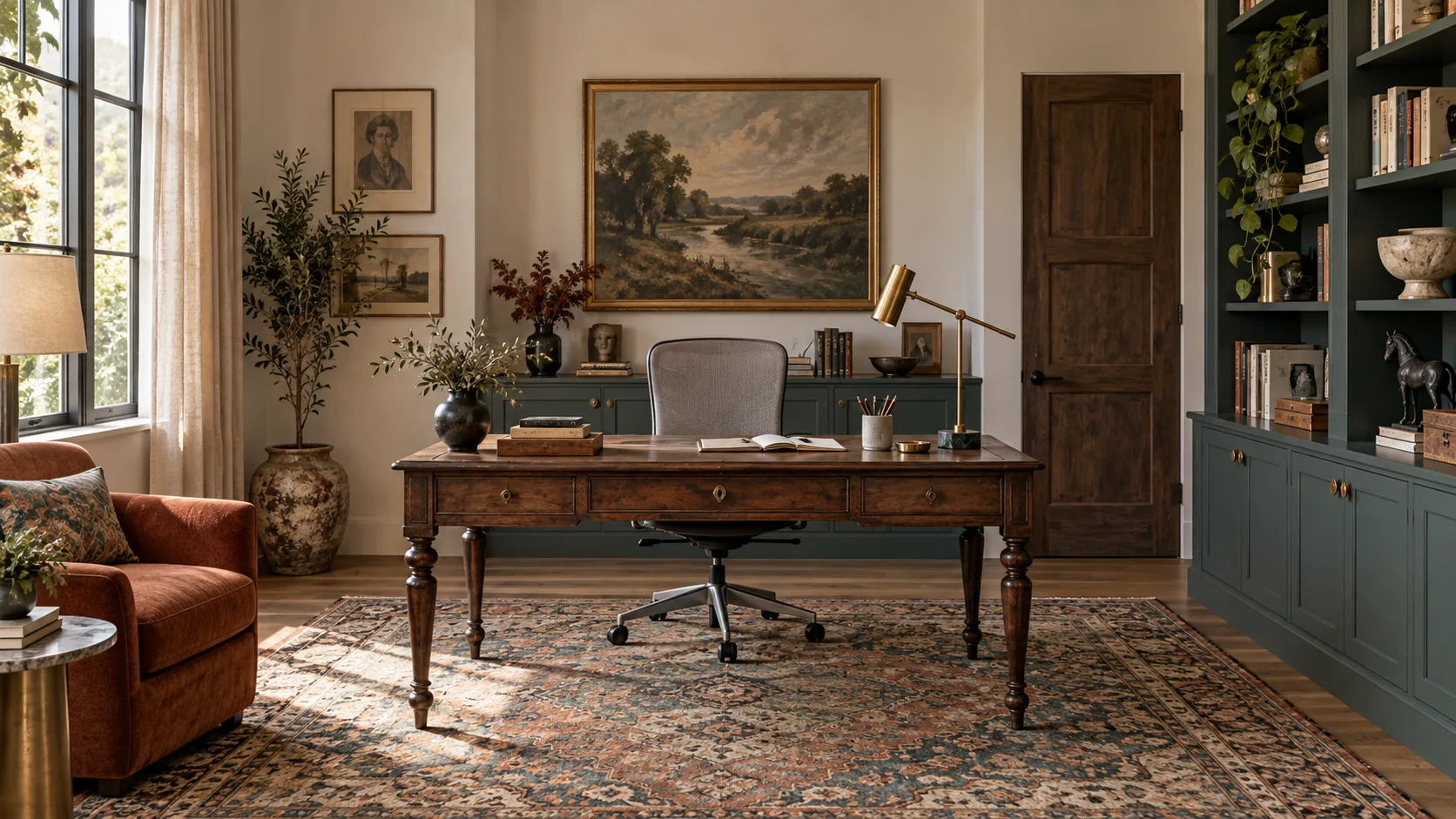
Image direction: expressive furniture with a practical work setup. The antique desk gives the office identity, while the supportive chair, task light, closed lower storage, and uncluttered work surface keep it usable.
Use AI to test the background visible on video calls as well as the camera-facing view. Open shelves should look collected, but they still need editing and storage for ordinary work supplies.
Eclectic patio and exterior: repeat the interior story outdoors
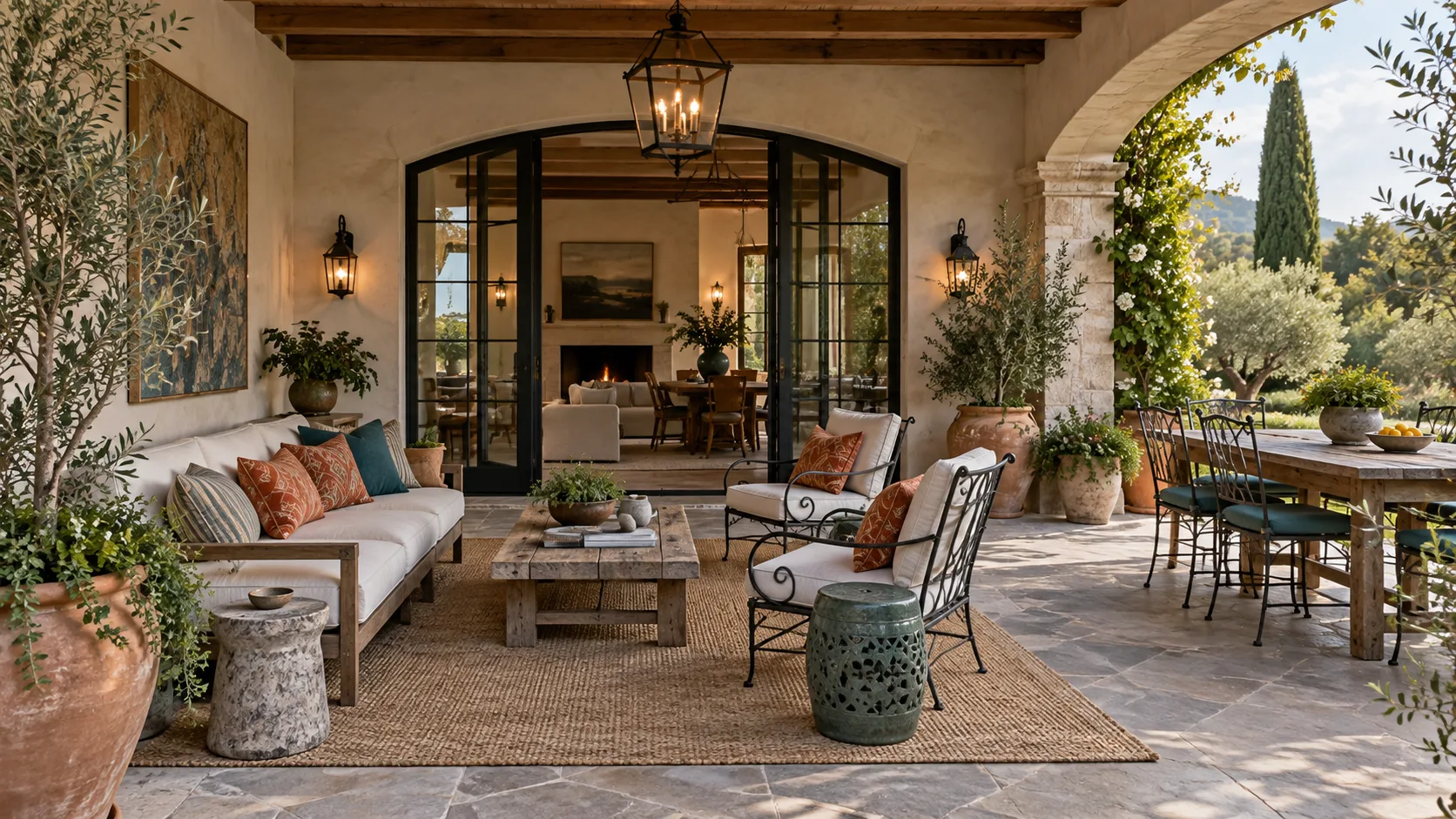
Image direction: mixed silhouettes unified by weather-ready materials. Iron seating, a contemporary sofa, aged wood, patterned textiles, stone, and planters echo the interior mix without using fragile indoor finishes.
Verify that outdoor furniture, rugs, metals, lighting, and textiles suit the local climate. An AI image can suggest the mix, but exposure, drainage, wind, fading, and maintenance should decide the actual materials.
Prompt examples for DesignSense AI
Use prompts that name the mix and the rule connecting it:
- "Redesign this living room in intentional eclectic style with a rust sofa, vintage rug, one antique cabinet, one sculptural contemporary chair, repeated teal accents, collected art, and clear walking space."
- "Create a restful eclectic bedroom with a rust upholstered bed, mismatched balanced nightstands, modern brass sconces, vintage landscape art, linen bedding, and a limited rust and teal palette."
- "Show this kitchen with classic green cabinetry, handmade neutral tile, a modern pale stone island, vintage runner, mixed wood and metal stools, and the same appliance layout."
- "Update this home office with an antique wood desk, ergonomic chair, vintage rug, dark green storage, a brass task light, edited art, and a clean video-call background."
For a more restrained collected look, compare this approach with modern rustic style. If color is the main organizing device, use the palette method in the blue and white rooms guide.
What to review before using the images
Eclectic AI concepts can hide mistakes inside visual richness. Check each output for:
- A clear palette, material, or shape repeated across the room
- No more than two or three dominant style influences
- Enough negative space around art, furniture, and collections
- Realistic furniture dimensions and open walkways
- Preserved windows, doors, ceiling height, and permanent architecture
- Kitchen, bathroom, electrical, and structural feasibility
- Honest disclosure if a concept is used to market a property
DesignSense is a strong fit for comparing style direction and organizing a room around pieces you already own. It is not a substitute for measurements, material samples, code review, construction documents, or professional installation.
Final workflow
Upload the living room first and create two or three concepts with different anchor pieces. Choose the version with the clearest repeated palette and the most believable circulation. Carry that rule into the bedroom, kitchen, bathroom, dining room, entryway, office, and patio, changing the intensity to suit each room.
The best eclectic style looks personal because the objects differ, and composed because the visual logic repeats.
Turn one room photo into a clearer next step.
Use DesignSense to move from room photo to a clearer concept without waiting on a slower manual workflow.